Why Coffee Puffs Up: The Bloom, Explained
What the bloom actually is, why fresh coffee releases CO2, and how a 30 to 45 second pause makes your pour-over taste better.
This post may contain affiliate links — see the full disclosure.
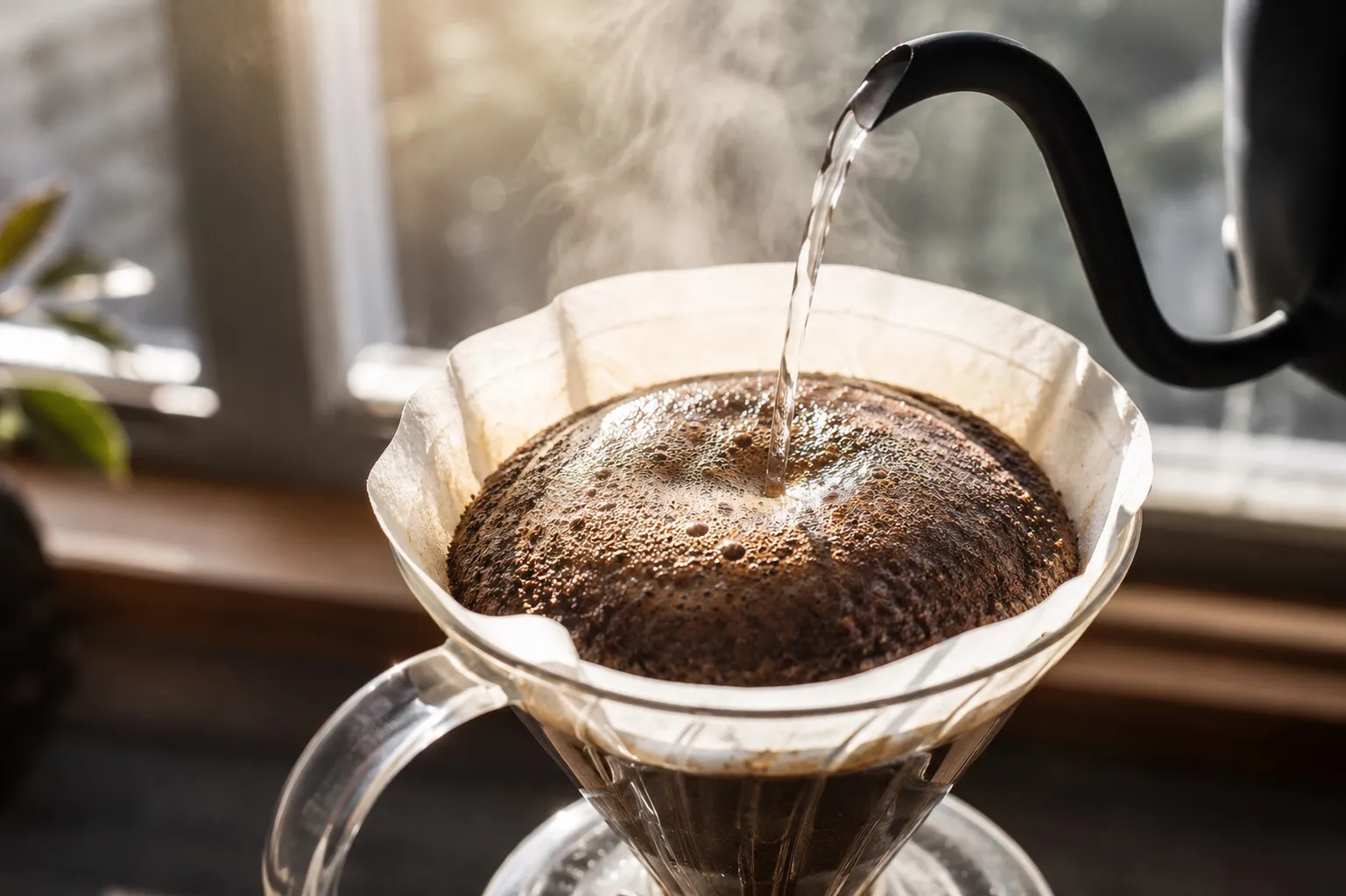
Pour a little hot water over fresh grounds and watch what happens. The bed swells, domes up, and fizzes like something alive. That’s the bloom: coffee degassing the instant water hits it, and one of the small daily pleasures of brewing by hand. It’s also telling you two useful things: how fresh your coffee is, and whether it’s ready to give you an even extraction.
The bloom is coffee degassing
When coffee is roasted, the heat drives reactions that produce carbon dioxide, and a lot of that CO2 gets trapped inside the bean. A freshly roasted bean is essentially a tiny pressurized container of gas. Grinding cracks it open, and the moment hot water hits, the trapped CO2 rushes out. The foam and the rising dome are that gas escaping through the wet grounds. The release has a name, degassing, and it’s why the bloom exists at all.
Why you should wait for it
While all that CO2 is venting, it gets in the way. The escaping gas forms little barriers between water and coffee, even pushing water away from the grounds instead of letting it soak in. Pour all your water at once over fresh coffee and the bed bubbles and churns, water races through the gassy channels unevenly, and extraction comes out patchy: some grounds over-extracted, others barely touched.
Blooming fixes this by getting the gas out first. Wet all the grounds with a little water, pause, and let the coffee degas and settle. Once the initial burst is done, the bed is saturated and calm, and the rest of your water flows through evenly, so every particle extracts at roughly the same rate. That’s what gives you a clean, balanced cup. Grind plays into the same thing: if your grind size is off, even a patient bloom can’t rescue the extraction.
How to bloom, in practice
| Step | Detail |
|---|---|
| Water | 2–3× the weight of the coffee (≈40–60 g for 20 g of coffee) |
| Coverage | Wet the whole bed; a gentle swirl or stir helps |
| Pause | 30–45 seconds, then continue your normal pour |
That window is enough for fresh coffee to vent the bulk of its CO2 without the wet grounds cooling too much before the main pour. On my Clever Dripper I bloom the same way before dropping the lid to steep, and it noticeably smooths out the cup compared to skipping it.
The bloom as a freshness gauge
Because the bloom is powered by trapped CO2, and CO2 leaks out steadily after roasting, the size of the bloom is a rough freshness meter:
- Big, domed, bubbling hard → fresh, roughly a week or two off roast.
- Flat, barely reacts → older, a month or two open. Not undrinkable, but the bright, lively flavors have faded.
There’s a flip side worth knowing: coffee that’s extremely fresh, a day or two off roast, can degas so aggressively that it’s hard to brew evenly. Many roasters suggest resting beans for a handful of days for exactly this reason. So a giant, violent bloom isn’t always ideal either.
The short version
The bloom is fresh coffee exhaling. Wait it out for half a minute, let the gas clear, and the water that follows can do its job evenly. It costs you nothing but a pause, and few things improve a hand-brewed cup for less effort. So watch the dome next time you brew. It has things to tell you about how your coffee is doing.
Water chemistry is the next door to open if you want to keep going, since what’s dissolved in your water shapes how all of this plays out. There’s a whole piece on water for coffee if you want it.
Sources: Fellow, Barista Life, Driftaway Coffee