Baratza Encore ESP: The First Espresso Grinder I'd Actually Recommend
A close look at the Baratza Encore ESP, the under-$200 grinder that finally makes home espresso dialing approachable for beginners.
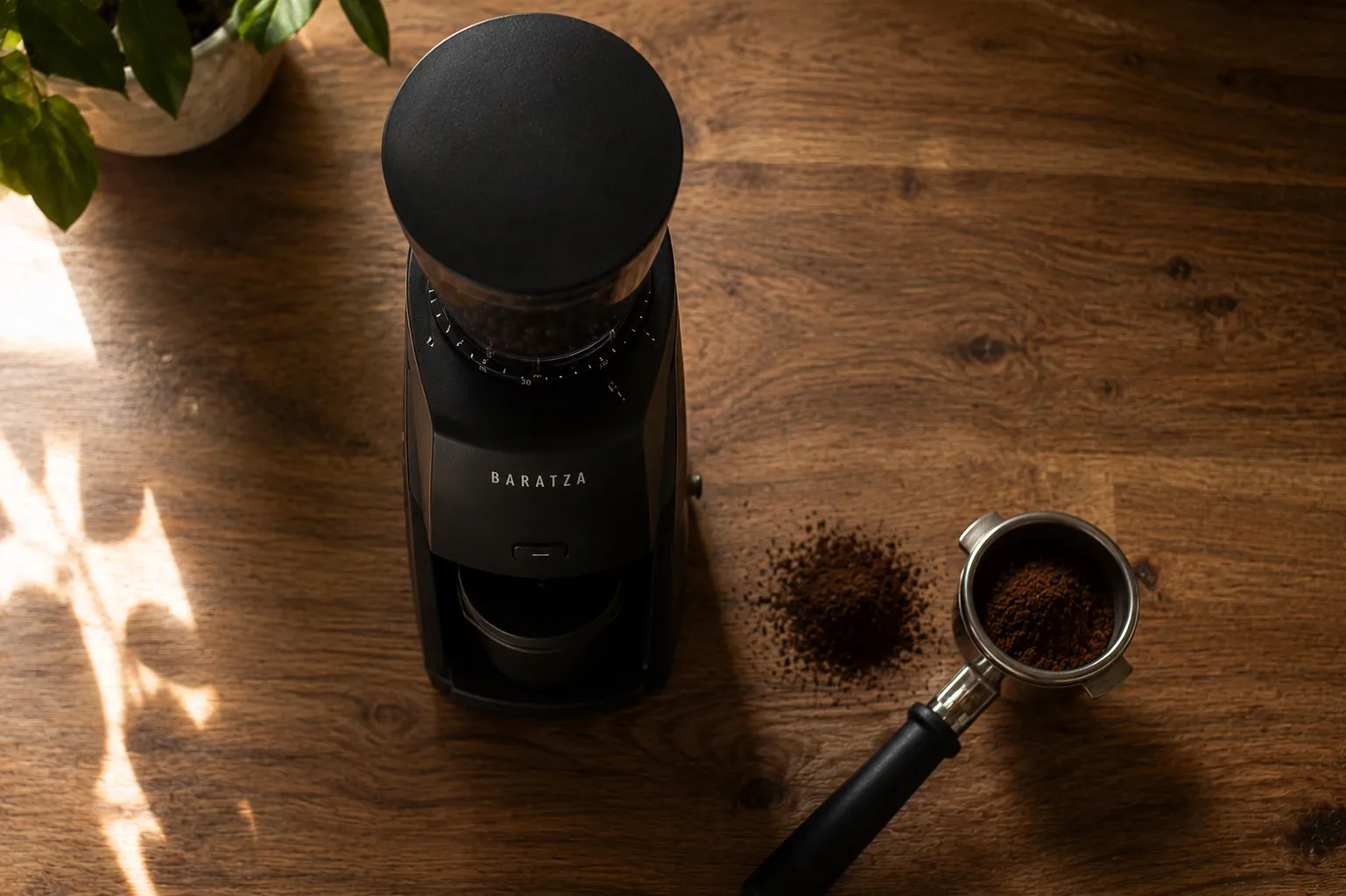
This post may contain affiliate links — see the full disclosure.
For years, the advice for anyone starting espresso at home came with an awkward footnote. Buy the machine, sure, but plan to spend as much or more on the grinder, because nothing under a few hundred dollars could grind fine and consistent enough to pull a real shot. People heard that, looked at their budget, and bought a cheap grinder anyway. Then they spent months blaming the machine, the beans, or themselves for shots that came out thin and sour one morning and choked to a trickle the next.
The Baratza Encore ESP is the grinder that finally made that footnote smaller. It isn’t perfect, and it isn’t going to embarrass a $600 machine. But at around $200 it does something genuinely useful: it gives a beginner enough grind resolution to actually dial in espresso, while still handling pour-over for the weekend. For a long time that combination simply didn’t exist at this price.
This is the grinder I keep pointing newcomers toward when they ask where to start, and the picture is unusually clear: the Encore ESP has been tested to death by reviewers whose verdicts line up closely. Here’s what holds up, where it shines, and where it hits its ceiling.
What it is, and the one number that matters
The Encore ESP is the espresso-capable version of Baratza’s original Encore, a conical burr grinder that’s been a fixture on pour-over counters for over a decade. The ESP keeps the familiar plastic body and simple controls, then changes the two things that decide whether a grinder can do espresso: the burrs and the adjustment resolution.
| Spec | Detail |
|---|---|
| Price | ~$199.95 |
| Burrs | 40mm M2 conical (Etzinger) |
| Settings | 40 stepped, dual-zone |
| Motor | ~550 RPM |
| Range | Espresso and filter |
| In the box | Dosing cup (54/58mm), grounds bin, brush, shims |
The burr swap is what drives the whole upgrade. The original Encore shipped with Etzinger’s M3 burr set; the ESP gets the sharper M2 set that used to be reserved for pricier Baratza models like the Virtuoso. (The naming is backwards, which trips everyone up: M2 is the better burr.) Reviewers who upgraded their old Encores to M2 burrs and then tried the ESP still noticed a real jump in clarity, so this is not just marketing. Sharper burrs cut more cleanly and produce fewer “fines,” the dust-sized particles that muddy a cup and clog an espresso puck.
How the dual-zone collar works
Here’s the design choice that earns the ESP its name. Those 40 clicks aren’t evenly spaced. Baratza split them into two zones that move the burrs by different amounts:
| Settings | Zone | Each click moves the burrs |
|---|---|---|
| 1–20 | Espresso | ~20 microns (fine, slow steps) |
| 21–40 | Filter | ~90 microns (coarser, bigger jumps) |
That difference is the whole point. Espresso is brutally sensitive to grind size: a change you can’t see with your eyes can swing a shot from sour to bitter. You need small steps to creep up on it. Filter coffee is forgiving and lives across a much wider range, so fine steps there would just mean clicking forever to get from a V60 to a French press. By making the espresso half of the dial high-resolution and the filter half coarse, Baratza gave beginners exactly the precision they need where they need it, and skipped it where they don’t.
If you’ve used a cheap grinder where one notch took you from gushing to strangled with nothing usable in between, this is the fix. The catch: the collar has no printed numbers, so you’re counting clicks from a reference point. Most owners just remember “espresso lives around setting 15” and adjust from there, which works because the steps are repeatable. Write down “setting 13,” come back tomorrow, and you’re in the same place.
Dialing it in
A sensible starting point for a medium roast is around setting 15, then you move finer (toward 1) if the shot runs too fast and sour, or coarser if it chokes and turns bitter. The grind is the lever; dose and timing are the other two. If you’re new to reading a shot by taste, our guide to dialing grind by taste covers which way to turn the dial when a pull comes out sour or bitter, so I won’t rebuild that here.
One honest limitation shows up fast with lighter roasts. Light roasts are denser and need a finer grind, and several testers found that on the stock settings the ESP couldn’t quite get there for a medium-light roast in a precision basket. Baratza includes shims, thin spacers that sit under the burr and push it closer to the outer ring, which opens up finer settings. They install in a few minutes. The trade-off is real, though: grinding that fine pushes the ESP into the territory where it gets clumpy, holds onto more grounds, and generates more heat. Dark and medium roasts, which is what most beginners are pulling anyway, give it no trouble at all.
Filter coffee, where it’s arguably the better value
It’s easy to fixate on the espresso story and miss that the ESP is a very good filter grinder for the money. For pour-over, AeroPress, and French press, the M2 burrs deliver clean, balanced cups with decent body, a clear step up from the original Encore. For most people serving most coffee, it’s more than enough.
Push into specialty-snob territory and you can find its ceiling. In blind pour-over tastings against the slightly pricier DF54 (a flat-burr grinder), reviewers gave the edge to the DF54: similar flavor notes while the cups were hot, but as they cooled the DF54 held a longer, more layered finish where the Encore’s faded off more abruptly. That gap is the kind of thing a trained palate notices with good water and careful brewing. If you’re at that level, you probably already know you want a flat-burr grinder. If you’re not, the ESP will pour you a really good cup.
Living with the plastic
The build is where the ESP shows its price. The body is mostly plastic, the on/off switch feels cheap, and the dosing cup sits a little loosely in the base. Knock the side and it sounds hollow. It’s also loud: noise measurements vary by test and method, landing roughly in the high-70s to low-90s decibel range, which puts it among the noisier grinders you can buy. The original Encore was just as rattly and ran for years, so the racket is more an annoyance than a warning sign about durability.
A couple of design details are worth knowing before you buy:
- The plastic impeller. A small plastic paddle spins to push grounds out the chute. It works, but it’s a wear part, and some reviewers dislike the idea of a plastic piece slowly shedding into the grounds over years of daily use. Replacements from Baratza are cheap, and grinders like Baratza’s own Sette avoid the part entirely by letting the burr eject grounds directly. It’s a fair critique, not a dealbreaker.
- Retention and clumping. One careful test measured about 1.1 grams of grounds left inside after grinding. That’s not bad, but it’s more than dedicated single-dose grinders hold, and it means you should purge a few beans when switching from espresso to filter so yesterday’s fines don’t contaminate today’s cup. At espresso settings the grounds clump, so plan on using a WDT tool (a cheap cluster of fine needles you stir through the grounds) for an even puck.
The flip side of all that plastic is serviceability, and this is where Baratza’s reputation earns its keep. The ESP is far easier to take apart and clean than the old Encore: the burr pops out for a quick brush-out without dismantling the whole machine. Parts are widely available and well documented, and Baratza’s US customer support is excellent. With routine cleaning these grinders tend to last. (Support outside the US is less consistent since the Breville acquisition, so weigh that if you’re abroad.)
How it stacks up
The ESP doesn’t exist in a vacuum. The three comparisons that come up most:
| Grinder | Burrs | Roughly | The trade |
|---|---|---|---|
| Original Encore | M3 conical | ~$170 | Cheaper, filter only, can’t do espresso |
| Encore ESP | M2 conical | ~$200 | The all-rounder reviewed here |
| Fellow Opus | 40mm flat | ~$195–230 | Prettier, quieter, fiddlier adjustment |
| DF54 | 54mm flat | ~$250+ | A real step up for filter, more money |
The original Encore still makes sense if you only ever brew filter, since the ESP’s espresso resolution is wasted on you. The Fellow Opus is the closest direct rival: better looking, noticeably quieter, with flat burrs, but its inner/outer adjustment rings are more confusing and most testers give the Encore ESP a slight edge specifically for espresso. The DF54 is the “spend a little more” answer for someone who cares most about pour-over clarity and metal build quality.
There’s also a newer Encore ESP Pro (around $300) that swaps the plastic body for cast zinc, goes stepless with a digital display and single-dose hopper, and runs quieter. It’s a real upgrade, but it’s a different budget and a steeper learning curve. For the beginner the standard ESP is aimed at, the extra hundred dollars isn’t obviously worth it.
So, should you buy it?
Buy the Encore ESP if you’ve got a starter espresso machine, you’re mostly pulling medium-to-dark roasts, and you want one grinder that covers both your morning shot and a weekend pour-over without spending more than the machine cost. For that person, it’s the most sensible first espresso grinder on the market, and it removes the single biggest obstacle a beginner faces: never knowing whether a bad shot was the grinder’s fault or theirs.
Look elsewhere if you only brew filter (the cheaper original Encore is plenty) or if you’re already chasing light-roast espresso and high-flow precision baskets, where the plastic chamber, retention, and static will frustrate you and a flat-burr grinder will reward you. For everyone else, the ESP gets you in the door, takes away the excuses, and makes your espresso problems solvable instead of mysterious. That’s a lot to ask of $200, and it mostly delivers.
Sources: The Coffee Chronicler, Seattle Coffee Gear, The Captain’s Coffee (Opus comparison), Prima Coffee (Opus comparison)