Pre-Infusion: The Gentle Soak That Settles Your Espresso
What pre-infusion does, why a few seconds of low pressure tames channeling, and how to try it on a home machine.
This post may contain affiliate links — see the full disclosure.
If you’ve spent any time chasing better espresso at home, you’ve met channeling: water punches a hole straight through the puck and races out, leaving the rest of the bed barely touched. The shot comes out fast and pale, tasting sour and harsh at once, and you swear you did everything right. Pre-infusion is one of the calmest, most effective tools for stopping it, and plenty of people never try it because the name sounds more technical than the thing actually is.
What is pre-infusion, exactly?
Pre-infusion means wetting the coffee gently before hitting it with full pressure. Instead of slamming the puck with the full ~9 bars right away, the machine first lets water seep in at low pressure (often around 3 bars) for a few seconds. Then the real extraction begins.
Some people call it pre-wetting, which is a clearer name. You’re letting the puck drink a little before you put it to work. Typical pre-infusion runs about 3 to 10 seconds at low pressure, depending on the machine and the coffee.
Why a few seconds changes everything
Dry coffee grounds don’t absorb water evenly. When the full nine bars hit a dry puck, water shoves through wherever it finds the path of least resistance, and once a channel forms, it stays. That channel over-extracts while the rest of the puck under-extracts, and you get the worst of both, bitter and sour, in one thin cup.
Pre-infusion heads this off:
- The gentle soak lets the whole bed saturate evenly and swell into place before the pressure ramps up.
- Trapped gas escapes slowly instead of cracking the puck open.
- By full pressure, the coffee is a uniform, settled mass, so water flows through evenly rather than carving a shortcut.
Even flow means even extraction, which means a more balanced, sweeter, more consistent shot. There’s a bonus, too: because the puck is more forgiving, you can grind a touch finer without choking the shot or triggering channeling, and a finer grind pulls more flavor out. The extra contact time during the soak also tends to build body.
How to try it at home
What’s available depends on your machine:
- Built-in pre-infusion. My Breville Barista Pro runs a brief low-pressure pre-infusion automatically at the start of every shot, part of why it’s forgiving for beginners. Machines like this do the work for you.
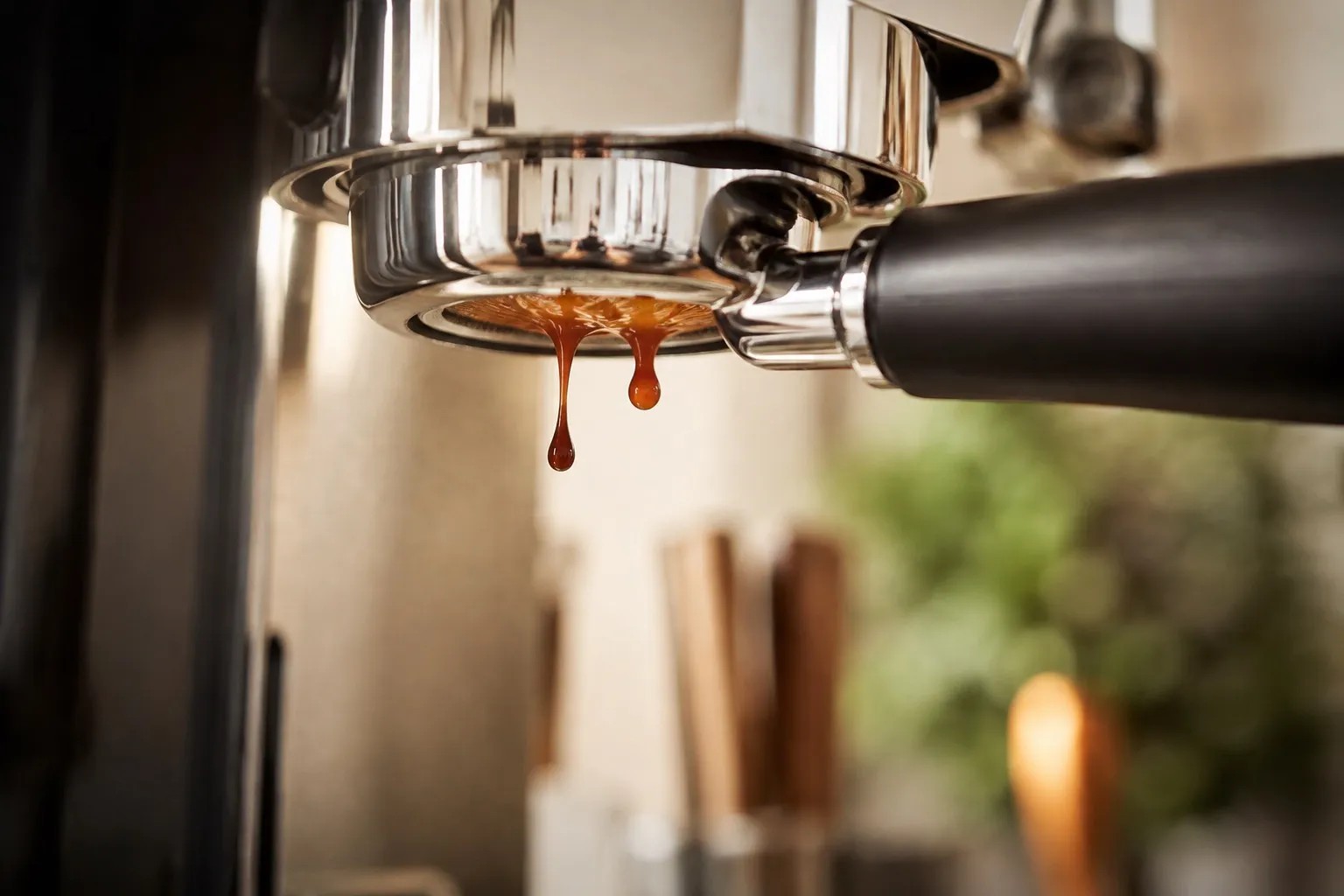
- Manual paddle or line-pressure. Start the water, let it wet the puck for a few seconds until you see the first dark drops beading at the bottom of the portafilter, then bring on full pressure. Those first drops are your sign the bed is saturated.
- No pre-infusion at all. You can fake a mild version if your machine allows any pressure control, but your bigger wins live before the shot: even, fluffed grounds and a level tamp do a lot of the same anti-channeling work.
Where it fits in the bigger picture
Pre-infusion isn’t magic, and it doesn’t replace good puck prep. Think of them as partners. Distributing the grounds evenly (the WDT trick with a thin needle tool is the popular method) sets up a level bed; pre-infusion then wets that bed gently so it stays level under pressure. Do both and channeling becomes a rare visitor instead of a daily fight.
A puck screen fits into that same wetting phase. It’s a thin metal mesh disk you rest on top of the grounds before locking the portafilter in, and because the water hits the screen first, it fans out across the surface before soaking down. That can help the low-pressure soak saturate the bed more evenly rather than sinking in at one weak spot. The effect on the shot itself is modest and something baristas still argue about, so treat it as a minor assist, not a replacement for even grounds and a gentle start. Its most dependable payoff is a cleaner machine, since less coffee ends up on the group head to wipe away.
Start by finding out whether your machine already pre-infuses, then watch a few shots go by and look for that first bead of dark coffee at the spout. A little attention there buys you cups that stop lurching between sour and bitter, and it folds neatly into a repeatable way to dial in a shot.
Pressure and timing figures here reflect common ranges from espresso education sources and will vary by machine and coffee.